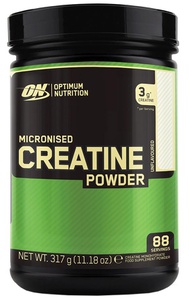
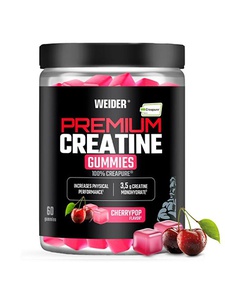
The essentials in 30 seconds
- What it does: creatine increases physical performance in successive bursts of short-term, high intensity exercise.
- The dose: 3 g a day, every day, training or not.
- Loading phase: optional. With 3 g a day, your muscles are full within 3 to 4 weeks.
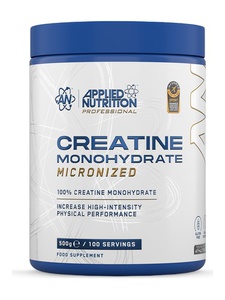
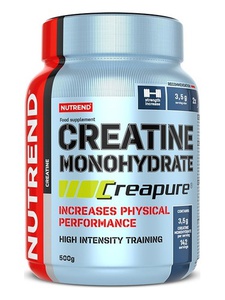
- Which one: monohydrate, the most studied and the cheapest. The Creapure label guarantees high purity.
What exactly is creatine?
Nothing exotic: your body already makes about 1 g a day from three amino acids, and you find it in meat and fish. 95% of it is stored in your muscles as phosphocreatine. It is the "instant boost" energy reserve your muscles use during the very first seconds of an intense effort: a sprint, a heavy set, a jump.
These stores have a limit, and your plate alone cannot fill them: to get 3 g of creatine, you would have to eat more than a kilo of raw meat a day. We would not recommend it. And if you are vegetarian or vegan, your diet provides none at all: your stores often start lower.
What does it really do?
Online, it is credited with just about everything. In Europe, only two health claims are authorised for creatine, because they are the only ones that are solidly proven:
Creatine increases physical performance in successive bursts of short-term, high intensity exercise.
The beneficial effect is obtained with a daily intake of 3 g of creatine.Daily creatine consumption can enhance the effect of resistance training on muscle strength in adults over the age of 55.
Effect obtained with 3 g a day, combined with resistance training at least three times a week for several weeks.For which sports?
All those made of short, explosive, repeated efforts:
Let's be honest: creatine replaces neither training nor a diet with enough protein. It is a boost, not a shortcut.
How much, and how to take it?
Usually one level scoop of powder. This is the dose used in Europe, and it is enough to fill your stores. Take it on rest days too: what matters is consistency, not training days.
What about the famous loading phase?
Stores full within 3 to 4 weeks. Simple, economical and easier on the stomach.
About 20 g a day, split into several doses, for 5 to 7 days, then 3 g a day. Faster, but a higher risk of digestive discomfort.
When?
The best time is the one you will not forget. Before or after training, at breakfast, with a meal: it does not matter. Many people simply add it to their protein shake after their session.
With what?
Monohydrate is almost tasteless: water, juice, a shake, a yoghurt, anything goes. Drink normally throughout the day. And no need for "cycles" with breaks: it can be taken continuously.
Monohydrate, Creapure, HCl… which one to choose?
The reference form: the one used in the vast majority of studies, and the cheapest.
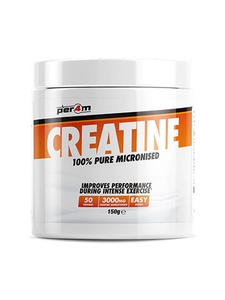
See monohydratesStill monohydrate, as a finer powder: less residue at the bottom of the glass.
Monohydrate made in Germany, known for its purity and strict controls.
See CreapureSold as better absorbed: none has outperformed monohydrate. An option if it sits heavy on your stomach.
Powder, capsules, tablets or gummies?
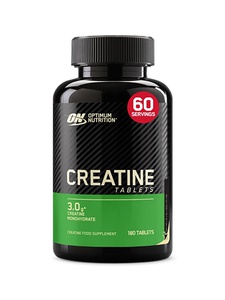
Our staff's tip: check how many units you need to reach 3 g. It is often 3 to 4 capsules, or several gummies: keep it in mind when comparing prices.
Questions we are asked in store
Does creatine cause bloating or water retention?
It draws water into the muscles, where it is stored. One or two extra kilos on the scale at the start is common, especially with a loading phase. It is water inside the muscle, not fat or "bloating" under the skin.
Is it bad for the kidneys?
In healthy people, at the recommended doses, studies have not shown any harmful effect on the kidneys. Creatine can, however, raise creatinine in a blood test: let your doctor know. If you have kidney disease, take medication or have any doubt, ask your doctor before using it.
Is it a doping product?
No. It is an authorised food supplement, not on the World Anti-Doping Agency's list of prohibited substances. If you are tested, choose products checked by lists such as the Kölner Liste.
Can women take it?
Yes: it works the same way, at the same dose. It is, however, not recommended for pregnant or breastfeeding women, or for children and teenagers.
Should you stop from time to time?
No, it is not necessary. If you stop, your stores gradually return to their starting level within a few weeks, with no "rebound" effect.