The essentials in 30 seconds
- Inactive adult: 0.83 g per kg of body weight per day, about 62 g for 75 kg.
- Athlete: 1.2 to 2.2 g per kg depending on the sport and goal.
- Spreading matters: 4 meals of 30 g are better than one meal of 120 g.
- Food first: a whey shake or a bar is there to top up when it is more practical, not to replace meals.
Reference values by profile
The calculator multiplies your weight by the reference value for your profile. Here is where these figures come from.
| Profile | Per kg per day | For 75 kg | Source |
|---|---|---|---|
| Inactive adult | 0.83 g | 62 g | EFSA (2012) |
| Over 65 | 1 to 1.2 g | 75 to 90 g | PROT-AGE Study Group (2013) |
| Endurance, regular sport | 1.2 to 1.6 g | 90 to 120 g | ISSN, ACSM |
| Strength training | 1.6 to 2.2 g | 120 to 165 g | Morton et al. (2018) |
| Cutting (with strength training) | 1.8 to 2.4 g | 135 to 180 g | ISSN (2017) |
Reference values for healthy adults, not a prescription. If you are very overweight, calculate with a "reasonable" weight for your height instead.
How much protein per day based on your weight
The table gives the amount of protein per day for the most common weights. Example: at 70 kg, an inactive adult aims for about 58 g of protein per day, and someone who does strength training 112 to 154 g.
| Weight | Not very active | Over 65 | Endurance | Strength training | Cutting |
|---|---|---|---|---|---|
| 50 kg | 42 g | 50–60 g | 60–80 g | 80–110 g | 90–120 g |
| 55 kg | 46 g | 55–66 g | 66–88 g | 88–121 g | 99–132 g |
| 60 kg | 50 g | 60–72 g | 72–96 g | 96–132 g | 108–144 g |
| 65 kg | 54 g | 65–78 g | 78–104 g | 104–143 g | 117–156 g |
| 70 kg | 58 g | 70–84 g | 84–112 g | 112–154 g | 126–168 g |
| 75 kg | 62 g | 75–90 g | 90–120 g | 120–165 g | 135–180 g |
| 80 kg | 66 g | 80–96 g | 96–128 g | 128–176 g | 144–192 g |
| 85 kg | 71 g | 85–102 g | 102–136 g | 136–187 g | 153–204 g |
| 90 kg | 75 g | 90–108 g | 108–144 g | 144–198 g | 162–216 g |
| 100 kg | 83 g | 100–120 g | 120–160 g | 160–220 g | 180–240 g |
Grams of protein per day, calculated with the reference values above. Valid for men and women alike: only weight matters.
Spreading it over the day
The body makes better use of protein when it comes in several servings. Studies on athletes suggest about 0.4 g per kg per meal, over at least 4 meals: 30 g per meal for 75 kg.
Where to find 25 g of protein?
The Tonic Food tip: write down what you eat for 2 or 3 days. Many people find they are already close to their target at lunch and dinner, but very low at breakfast. That is often where to add some.
Why it matters
Protein contributes to the maintenance of muscle mass.
Protein contributes to a growth in muscle mass.
Protein contributes to the maintenance of normal bones.
What if I eat too much?
For a healthy adult, EFSA considers that an intake of up to twice the reference value (about 1.7 g per kg) is not a problem. Above that, there is less data, but studies on athletes eating 2 g per kg and more have not shown harmful effects. Extra protein is not "lost": it provides calories like everything else (4 kcal per gram).
Questions we are asked in store
How much protein per day for a woman?
Needs depend on weight, not sex: 0.83 g per kg per day for an inactive woman, about 50 g for 60 kg. An active woman aims for 1.2 to 2 g per kg depending on her sport.
How much protein per day for a man?
About 0.83 g per kg per day for an inactive man, i.e. 62 g for 75 kg and 66 g for 80 kg. With strength training, rather 1.6 to 2.2 g per kg, i.e. 120 to 165 g for 75 kg.
How much protein per day for an adult?
The EFSA reference is 0.83 g per kg of body weight per day, about 58 g for 70 kg and 66 g for 80 kg. It is a minimum for an inactive adult.
How much protein per day to build muscle?
Studies suggest about 1.6 g per kg per day, up to 2.2 g for those who want to maximise their chances, together with regular strength training.
Should I calculate with my current weight?
Yes, if your weight is close to normal. If you are very overweight, use a reasonable weight for your height instead, otherwise the result is overestimated.
Can you eat too much protein?
For a healthy adult, up to about twice the reference value is not a problem according to EFSA. If you have kidney disease, are pregnant or follow a special diet, ask your doctor.
Do I have to take whey?
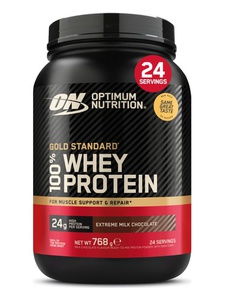
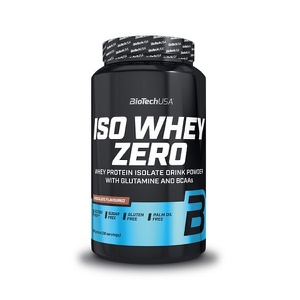
No. You can get everything from food. Whey is simply a quick and practical way to add 20 to 25 g of protein, for example after training or at breakfast.