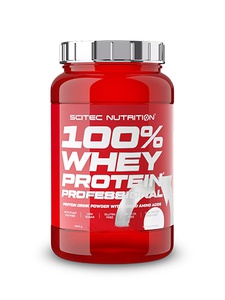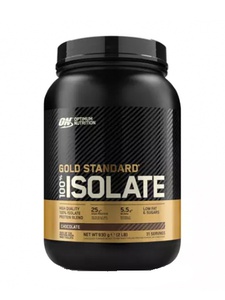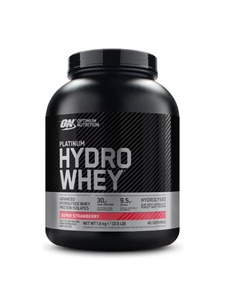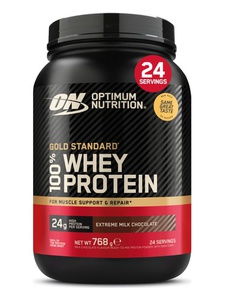
The essentials in 30 seconds
- Concentrate: the most affordable and the creamiest. A little lactose and fat.
- Isolate: more protein, almost no lactose or fat. A little more expensive.
- Hydrolysate: proteins already "cut up", the most expensive, with a more bitter taste. Mainly useful for sensitive stomachs.
- What matters most: your total protein intake for the day, far more than the type of whey.
What exactly is whey?
Whey is the liquid left over when cheese is made. Milk contains two families of protein: about 80% casein and 20% whey protein. This whey is filtered and dried into a powder rich in very high-quality protein, which mixes in seconds.
So all wheys come from the same place. What changes is how far the filtration goes: the more it is filtered, the more protein remains, and the less lactose and fat.
Whey isolate vs hydrolyzed vs concentrate: the comparison
Filtered once. It keeps a little lactose and fat, which also makes it creamier.
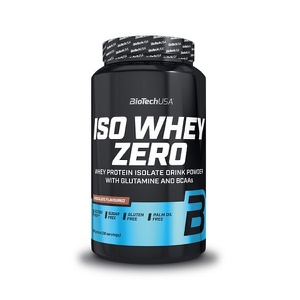
Filtered more finely: over 90% protein, almost no lactose or fat left. Lighter in the mouth.
Also called whey hydrolysate or « Hydro Whey ». Its proteins are already partly broken down into small pieces (peptides). More expensive, with a slightly bitter taste.
Indicative values to compare the types with each other: every brand has its own recipe, the label tells the truth.
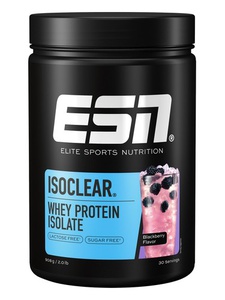
What about clear whey? It is an isolate made into a clear, fruity drink, like a juice or an iced tea, rather than a milky shake. Ideal in summer or for those who do not like "milkshake" drinks. See clear wheys.
What protein really does
Whey is a source of protein, no more, no less. The claims authorised in Europe for protein are:
Protein contributes to a growth in muscle mass.
Protein contributes to the maintenance of muscle mass.
Protein contributes to the maintenance of normal bones.
Whey is nothing magical: above all, it is convenient. A shake provides 20 to 25 g of protein on average in 30 seconds, with no cooking and no washing-up.
Which one for whom?
How much, when and how?
A serving of 25 to 30 g of powder usually provides 20 to 25 g of protein. One or two servings a day are enough for most athletes, on top of your meals.
How much protein per day?
For adults, the European reference is about 0.83 g of protein per kilo of body weight per day. For athletes, 1.2 to 2 g per kilo is often quoted, depending on training. Whey tops up what your meals do not provide; it does not replace them. For your exact figure: our protein per day calculator.
With water or milk?
Fewer calories, easier to digest, ideal right after training. The taste is a little less rich.
Creamier, with a little extra protein, but also more calories.
The Tonic Food tip: to compare two wheys, look at the price per kilo and the protein per serving, not just the price of the tub. And start with a small size to make sure you like the taste.
Questions we are asked in store
What is hydrolyzed whey protein?
It is whey whose proteins have been partly broken down by enzymes into smaller pieces (peptides) during manufacturing. It is usually made from isolate, so it is very rich in protein and low in lactose, but more expensive and slightly bitter. Products named « Hydro Whey » are hydrolyzed wheys.
Does whey make you gain weight?
A serving usually provides 100 to 130 kcal. Like any food, it only makes you gain weight if you exceed your needs over the day. In a balanced diet, it can even help you reach your protein target without too many calories.
How much whey should I take per day?
One or two servings of 25 to 30 g of powder (20 to 25 g of protein each) are enough for most athletes, on top of your meals.
Should I take it on rest days?
Yes, if your meals do not provide enough protein. Your needs do not stop on days without training.
Is it only for bodybuilders?
Not at all. It is simply a convenient source of protein: runners, cyclists, active people, seniors who want to keep their muscle mass… many people use it.
Can I cook with it?
Yes: pancakes, porridge, yoghurt, smoothies… Just avoid boiling it for a long time. Vanilla or unflavoured whey works best in recipes.
I am lactose intolerant, can I take it?
Often yes, with an isolate or a hydrolysate, which contain very little lactose: check the label. However, if you are allergic to milk protein, no whey is suitable.