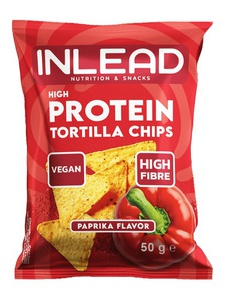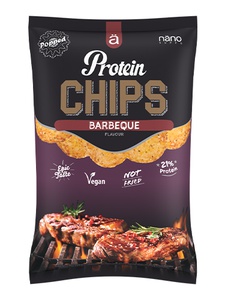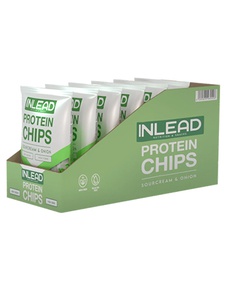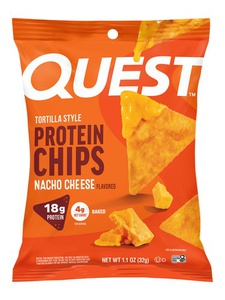
The essentials in 30 seconds
- What they are: chips made largely from protein (milk, soy, pea) instead of potato.
- The real plus: on average 5 times more protein, 20% fewer calories and 60% less fat than regular crisps.
- Watch out for: they are often saltier. One bag, not three.
- Which ones: Quest for maximum protein, Inlead for the protein-fibre balance.
What are protein chips?
They are chips whose dough is made largely of protein: milk, soy or pea protein, often mixed with a little corn, rice or potato for crunch. They are often puffed or baked rather than fried in oil. The result: much more protein, and clearly less fat than an ordinary bag of crisps.
Protein chips vs regular crisps: the match
Per 100 g. Protein chips: average of the labels of our 5 products. Regular crisps: plain salted potato chips (USDA FoodData Central).
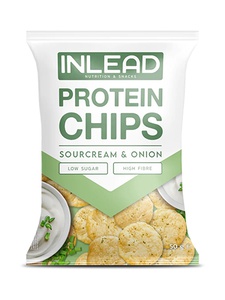
In practice, for a 25 g bag: about 8.8 g of protein and 104 kcal with Inlead Protein Chips, versus 1.6 g of protein and 134 kcal with regular crisps.
Our 5 protein chips compared
| Per 100 g | Protein | kcal | Fat | Carbs | Fibre | Salt |
|---|---|---|---|---|---|---|
| Quest Protein Tortilla Chips | 56 g | 469 | 18.8 g | 12.5 g | 3.1 g | 2.6 g |
| Inlead Protein Chips | 35 g | 414 | 12 g | 35 g | 11 g | 2.5 g |
| Inlead High Protein Tortilla Chips | 35 g | 423 | 13 g | 36 g | 11 g | 2.4 g |
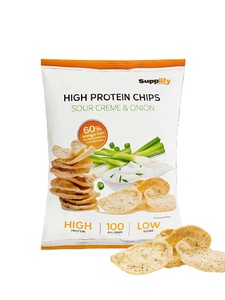
| Supplify High Protein Chips | 26 g | 400 | 11.1 g | 49 g | 7.9 g | 2.7 g |
| Nanosupps Protein Chips | 21 g | 422 | 10.8 g | 57.4 g | 6.5 g | 3.1 g |
Label values (reference flavour for Quest: Nacho Cheese, Supplify: BBQ, Nanosupps: Salt & Pepper). They vary slightly by flavour.
Are protein chips healthy?
They are clearly better than regular crisps: more protein, less fat, fewer calories. Protein also has effects recognised in Europe:
Protein contributes to the maintenance of muscle mass.
Protein contributes to a growth in muscle mass.
But let's be honest: they are processed products, and saltier than regular crisps (about 2.5 g of salt per 100 g versus 1.3 g). A 25 to 40 g bag provides 0.6 to 1.2 g of salt, out of a recommended maximum of about 5 g a day. They remain a smarter treat, not a staple food.
As a snack, in front of a match, in your gym bag: the same crunchy pleasure, with much more protein.
For everyday protein, fresh foods (meat, fish, eggs, skyr) or a shake remain better suited.
What about weight loss?
No food makes you lose weight on its own: it is the daily balance that counts. But if you like salty snacks, swapping a bag of regular crisps for protein chips saves calories and fat while adding protein. As long as you stick to one bag.
6 ways to enjoy them
The Tonic Food tip: compare chips per bag, not just per 100 g: bags range from 25 to 40 g. And keep an eye on salt if you eat them often.
Questions we are asked in store
What are protein chips made of?
A protein-rich dough (milk, soy or pea protein), often mixed with a little corn, rice or potato, then puffed or baked. The exact list varies by brand: it is on each product page.
Are protein chips healthy?
They are better than regular crisps: on average 5 times more protein, 60% less fat and 20% fewer calories. They are, however, saltier: enjoy them as a snack, one bag at a time.
Are protein chips good for weight loss?
No food makes you lose weight on its own. But swapping regular crisps for protein chips lets you snack on something salty with fewer calories and more protein.
How much protein is in a bag?
From 8 to 18 g depending on the brand: about 8.8 g for a 25 g Inlead bag, 8.4 g for a 40 g Nanosupps bag and 18 g for a 32 g Quest bag.
Can I eat them every day?
A bag now and then instead of regular crisps, yes. Every day, mainly watch the salt, and keep your main protein in fresh foods.